
Learn Russian Online: Best Resources for Beginners in 2026

Russian has more good free material than almost any language outside the big five, and beginners still stall at the same point. The bottleneck is not access. Nearly every resource is built to explain Russian to you, and almost none is built to react to the Russian you produce. This page lists the resources worth your first ninety days, grouped by the job each does, then answers why the drop-off lands in month two.
Learn Russian online: what the first ninety days look like
Set expectations with official training schedules rather than app marketing. The US State Department sorts languages into difficulty bands for its own diplomatic training, and Russian sits in one of the harder bands, with a full-time course scheduled to run far longer than for Spanish or French, toward professional working proficiency. Those are hours in a classroom with a teacher every working day, so the total is not a formula you can apply to your evenings, and nothing online shortens the underlying point: Russian takes time.
A realistic ninety-day sequence: week one for the alphabet, weeks two to six for a structured course plus a review deck, and from week three onward some form of live output. That third item is the one learners postpone, and postponing it is what makes month two feel like a wall.
Before the individual reviews, here is the whole field in one view. The final column is the one most comparisons omit, and it predicts more than any feature list.
| Russian source | Strongest at | Where it stops | Does anyone correct your Russian |
|---|---|---|---|
| RussianPod101 | Huge graded audio library with transcripts | Passive by design, little output | Not in the lesson library; a paid Premium PLUS tier adds a personal teacher |
| Easy Russian | Unscripted street speech with dual subtitles | No syllabus, no grammar path | No |
| Master Russian | Deep grammar reference, cases and verbs | Reference, not a course | No |
| Real Russian Club | Slow, clear podcast for early listening | Listening only | No |
| Pimsleur | Spoken recall drilled out loud from lesson one | Small vocabulary, little reading | No |
| Russian For Free | Free structured lessons and audio drills | Dated interface, thin at A2 | No |
| Russian For Everyone | Clear plain-English grammar tables | Grammar only | No |
| Rocket Russian | Self-paced course with speech drills | Grammar coverage is uneven | No |
| Forvo | Native pronunciation of any single word | Single words only | No |
| Russian with Max | Comprehensible input at graded speeds | One channel, no course structure | No |
| Duolingo | Daily habit through the alphabet and first words | Closed exercises, no free sentences | Automated checking only |
| Memrise | Ready-made decks with native speaker clips | Shallow past common words | Automated checking only |
| Clozemaster | Vocabulary inside full sentences with case endings attached | Assumes some grammar already | Automated checking only |
| LingQ | Turning any Russian text into a graded lesson | Setup effort, input only | No |
| italki | Scheduled lessons with professional teachers | Needs booking and budget | Yes, scheduled teacher feedback |
| HelloTalk | Unscheduled native speaker conversation and correction | No syllabus of its own | Yes, native speakers plus AI grammar feedback |
Read the last column downward and the shape of online Russian becomes obvious. Every resource on this page can teach you to recognise Russian; only italki, HelloTalk and RussianPod101's paid teacher tier put a person in front of the sentences you produce yourself. That gap, not difficulty, is what the rest of this page is organised around.
Learn Cyrillic, Then Build Vocabulary and Grammar Together
The Russian alphabet has 33 letters, and most map onto sounds English already has. A focused week is usually enough to read Cyrillic slowly, and it gets comfortable with use. Every popular resource opens with it because it is the one part of Russian that produces fast, visible wins.
The problem is what that early win teaches you to expect. Russian nouns take 6 cases, nominative, genitive, dative, accusative, instrumental and prepositional, and each changes endings across three genders, plural forms and adjectives that must agree. Verbs then add aspect, the imperfective and perfective pairing with no clean English equivalent. The alphabet takes about a week and the case system takes many months, which is why the hard part of Russian arrives in month two rather than week one.
So plan for it. Learn Cyrillic fast, do not celebrate it as progress, and start collecting case forms as whole phrases from day ten. For the verb side, HelloTalk's guide to how beginners should approach Russian verb aspect covers the imperfective and perfective split in more detail than a hub page can.
Free courses and structured websites
Free Russian is unusually strong on structure. These three give you a syllabus without asking for a card.
Russian For Free
Russian For Free is one of the longest-running free Russian portals, with sequenced beginner lessons, audio dialogues, grammar drills and printable material, and it gates nothing. The interface shows its age and content thins around A2, but for weeks one to six it is a complete path.
Master Russian
Master Russian is the reference the other sites quote. Its pages on the six cases, verb conjugation, stress patterns and the 1,000 most common words are more thorough than most textbooks, and its declension tables are the ones to bookmark. Use it when a lesson leaves you confused about an ending.
Russian For Everyone
Russian For Everyone is a smaller grammar site explaining things in plain English with tables you can actually read. Its strength is sequencing: noun gender, then plurals, then the accusative, in the order a beginner meets them.
RussianPod101 and audio-led options
Russian rewards ear training early, because written Russian and spoken Russian diverge fast once vowel reduction and stress shifts arrive.
RussianPod101
RussianPod101 is the largest audio library in the language, with hundreds of lessons graded from absolute beginner upward, each with transcripts, line-by-line breakdowns and vocabulary lists. The free tier gives you real listening volume, and its lesson notes explain what you just heard better than most textbooks. Its limit is structural: the lesson library is built for you to consume lessons, not to produce sentences someone checks. RussianPod101 also sells a separate Premium PLUS tier that assigns a personal teacher who returns written feedback and corrections through a messenger. That is a tutoring service attached to the library, not part of the free listening it is known for, so treat the two as different products.
Pimsleur
Pimsleur takes the opposite approach and forces recall out loud from the first minute, using spaced prompting in audio form. Thirty minutes a day builds a speaking habit and trains rhythm, because a lesson cannot be completed silently. Vocabulary stays small and reading is barely touched, so treat Pimsleur as a speaking-habit trainer beside a text course.
Rocket Russian
Rocket Russian sits between the two, with a self-paced course of audio lessons, culture notes and voice recognition drills comparing your pronunciation against a native recording. It suits beginners who want one linear thing to follow, though grammar coverage is uneven in the middle levels.
Real Russian Club
Real Russian Club is a podcast and blog built around slow, clearly enunciated Russian for learners, with transcripts. Its slow episodes are the gentlest bridge between textbook audio and real speech, and hearing one episode three times in a week beats one pass through three.
Those four are among the most authoritative audio-led Russian resources online, and their lessons share one blind spot. The recorded lessons at RussianPod101, Pimsleur, Rocket Russian and Real Russian Club cannot react to a sentence you built yourself; the one exception on this page is RussianPod101's paid teacher tier, which is a tutoring add-on rather than part of the lessons. That is not a flaw, simply outside their scope, and it is the slot you fill yourself.
Apps for vocabulary, and the one habit that makes them work
Vocabulary apps work when they are reviewed daily and abandoned when they become the whole plan.
Duolingo
Duolingo describes itself as the world's most downloaded education app, and its Russian course is a reasonable way to build a daily streak through the alphabet and first few hundred words. A beginner who opens it daily for a month is ahead of one who opened a textbook twice. Duolingo can build the daily habit that Russian requires, but its exercise format cannot judge whether your instrumental case made sense in a sentence you invented. Use it as a warm-up, not a syllabus.
Memrise
Memrise adds short native speaker video clips to its ready-made Russian decks, which is the fastest way to hear how a word sounds in a real mouth rather than a synthesiser.
Clozemaster
Clozemaster drills vocabulary inside full Russian sentences with the target word blanked out, which keeps case endings attached to the words they belong to instead of stranding them on isolated flashcards, and forces you to read the surrounding grammar rather than a bare word pair. Introduce it around week five, once the first case endings mean something to you.
Reading and listening material graded for beginners
Input at the right difficulty is what makes grammar stop feeling like rules.
Easy Russian
Easy Russian films unscripted street interviews with dual Russian and English subtitles, so you hear how people actually speak, at speed, with filler words and half-finished sentences. Start with the Super Easy episodes and re-watch rather than moving on.
Russian with Max
Russian with Max is comprehensible input done properly: a native speaker on ordinary topics at graded speeds, with visual support. Because the same speaker recurs, your ear adapts to one voice first, easier than jumping between channels.
LingQ
LingQ turns any Russian text or transcript into a study lesson, tracking known and unknown words as you read and letting you import your own material. Setup takes effort, but it solves the hardest problem in Russian reading, finding texts at your level.
Forvo
Forvo is a pronunciation dictionary with native recordings of individual words, and it settles the stress question. Russian stress is unmarked in writing and moves between forms, so checking a word on Forvo before memorising it prevents a habit you will spend months undoing.
Speaking practice and language exchange
Everything above this heading is input. Russian only starts to feel learnable when someone who speaks it reacts to what you said, and no amount of graded audio substitutes for that. This is the layer to add in week three, not month six.
HelloTalk
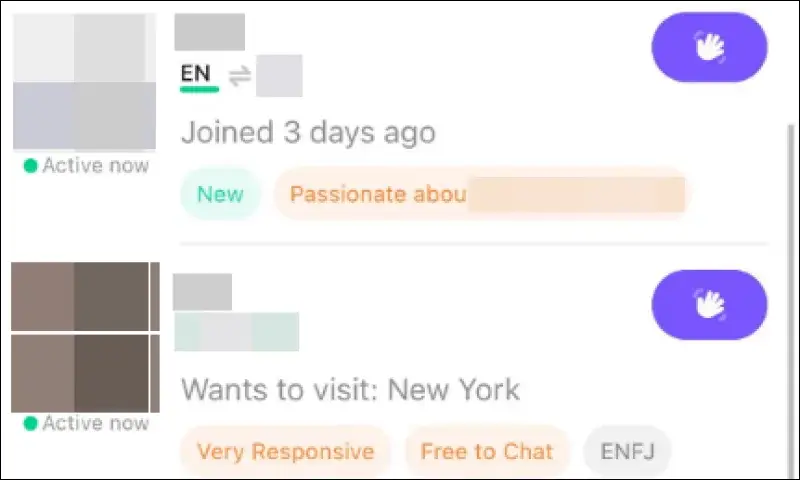
HelloTalk is a language exchange platform with 70M+ registered users across 200+ countries and 260+ languages, and it belongs in a beginner Russian stack because it supplies the one thing the lesson libraries cannot: native speakers who can correct you in writing and in voice, on sentences you chose to write. HelloTalk keeps 90% of core features free, and HelloTalk reports over 1 billion messages moving through the platform daily.
Chat-based learning is the core. HelloTalk pairs you with native Russian speakers for text and voice messages, and the chat window carries the study tools inside it: in-chat translation lets you check a phrase without leaving the conversation, and in-chat correction lets your partner rewrite your sentence inline so you see your version and the native version stacked together. For case endings that side-by-side view beats any table, because you see the exact ending a native speaker would have used in your own sentence.
Moments is the public feed, where you post a sentence, photo caption or short voice clip in Russian and native speakers comment and correct it. It is the low-pressure option for learners not ready for live conversation, and a daily Moments post costs two minutes and produces something a person can react to.
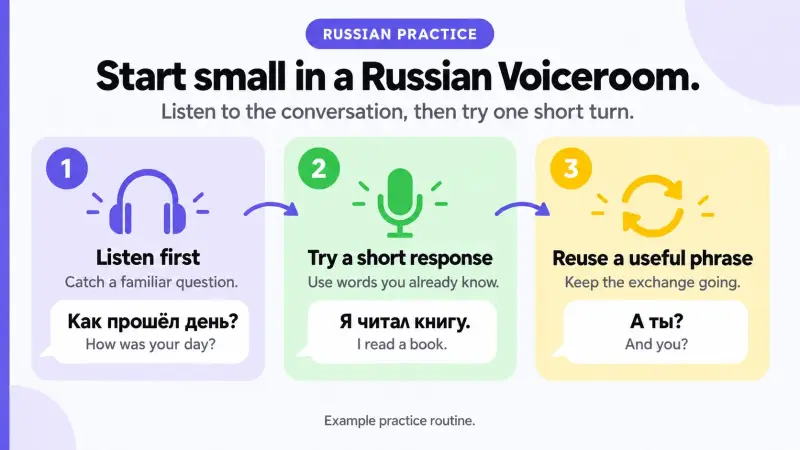
Voicerooms and Livestreams move it into audio. HelloTalk hosts group voice rooms and host-led streams on ordinary topics, so you can listen to unscripted Russian between real speakers before saying anything yourself.
HelloTalk's AI learning tools sit behind the human layer rather than replacing it, with grammar feedback, pronunciation checking and rewriting suggestions on your own sentences. On running an exchange well instead of letting it drift into small talk, HelloTalk's guide to structuring a Russian language exchange is the practical companion, and the Russian learning hub for beginners collects the starting material in one place.
italki
italki solves a different problem on a different axis. It connects you to professional Russian teachers and community tutors for scheduled lessons, the right choice when you need a curriculum, exam preparation or someone accountable for your progress. The distinction is scheduling: italki gives you one prepared hour at a fixed time, while unscheduled exchange gives you twenty small corrections across the week.
Why beginners quit in month two
Month one is the alphabet, the first hundred words and the novelty. Month two is when the cases arrive properly, audio that felt comprehensible stops being comprehensible, and the streak becomes a chore with no visible output. That is the window to plan for, because the grammar load lands there whatever resource you chose.
Four defensive actions, in order of effect. Move output earlier than feels comfortable, because a corrected sentence is the only feedback that registers as progress. Replace new material with repeated material for two weeks. Stop measuring in lessons finished and start measuring in sentences produced and corrected. Accept partial comprehension as normal rather than as failure, since Russian grammar loads its difficulty into exactly this window.
This page gives you the defensive moves. The deeper explanation of the mechanism, why so many well-made Russian resources structurally lose learners at this point, is covered in HelloTalk's analysis of what happens to Russian learners in their seventh week.
Frequently asked questions
How long does it take to learn Russian as a beginner?
There is no verified figure for casual conversational comfort. For professional proficiency, US State Department training is the honest reference point, and it schedules Russian as one of its longer full-time courses aimed at a far higher bar than a first slow conversation. For a self-learner, the practical measure is how early you start producing sentences that someone corrects, because that is what a first simple conversation is built from.
What is the best free resource to learn Russian online?
There is no single answer, because the free options split by job. Russian For Free gives the syllabus, Master Russian the grammar reference, RussianPod101's free lessons the listening, Clozemaster or Memrise the retention, and HelloTalk the free native speaker conversation and correction the others do not attempt. Combining four free tools beats paying for one.
Should I learn the Russian alphabet before anything else?
Yes, and quickly. Cyrillic has 33 letters, and a week of focused work makes you a slow reader, which unlocks every other resource. What matters is not treating that week as a milestone, because the real difficulty starts afterward with the six cases.
Is Duolingo enough to learn Russian?
No, and it is not designed to be. Duolingo is effective at building the daily habit and first few hundred words, but its closed exercise format cannot assess sentences you construct yourself, and Russian case and aspect errors only surface when a speaker reacts to your output. Keep it as the warm-up layer.
How do I stay motivated learning Russian on my own?
Shorten the feedback loop. Motivation in Russian collapses when effort stops producing visible results, so tie your routine to something that responds: a daily Moments post that gets corrected, a weekly voice room, a partner who notices if you disappear. A partner who notices when you disappear is a stronger reason to open the app than a streak counter.
When should I start speaking Russian with native speakers?
Week three, with about a hundred words and the present tense. Waiting until you feel ready means waiting past the point where most people quit. Text exchange first, then voice messages, then live conversation is the sequence that works for nervous beginners.
Do I need a paid tutor to learn Russian?
Not to start, and not to reach conversational level. A paid teacher on italki is the efficient route to structured progress and exam preparation, but correction itself is available free through exchange. Most beginners benefit more from daily unscheduled correction than one scheduled lesson a week.
Keep Practice Manageable When the Grammar Load Increases
Every resource here is good at what it does, and the choice between them matters less than you think. The observable test for month two is simple: does week seven find you producing sentences someone corrects, or only collecting more lessons to consume? The grammar load arrives on schedule either way; what you can choose is whether feedback arrives with it.
Pick one structured course, one audio source, one review deck, and one human being. Learn the 33 letters this week, expect the 6 cases to hurt next month, and get your first corrected Russian sentence in front of a native speaker before you feel ready for it.