The English Language Learner's Guide: Programs, Levels, and Real Practice
Millions of people are learning English through a program, a class, or an app, and most of them share the same frustration: the classroom teaches the language, but it rarely gives enough time to actually speak it. An English language learner improves fastest when a structured program is paired with daily speaking practice, because programs build knowledge and only real conversation builds the ability to use it. Understanding how the pieces fit is the first step to closing that gap.

This guide explains how English language learner programs are organized, what the levels mean, and how to add the practice that classes leave out. For a beginner's toolkit, our best English learning apps for beginners guide is a useful companion.
How English Language Learner Programs Are Structured
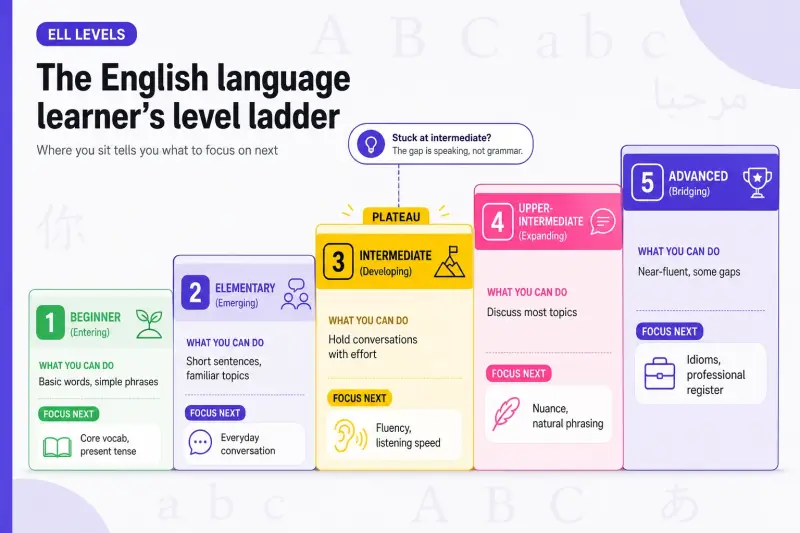
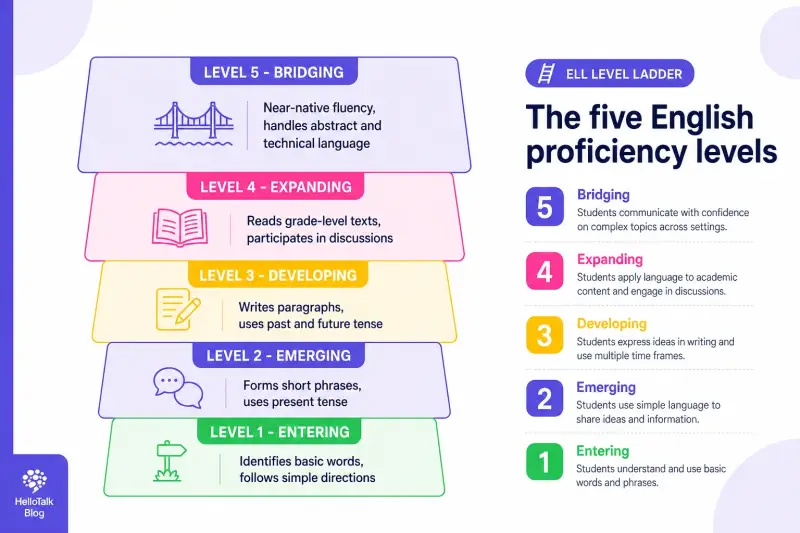
Most English language learner (ELL) programs, whether in schools, community centers, or online, follow a rising sequence of levels. Knowing where you sit tells you what to focus on next.
| Level | Typical label | What you can do | Focus next |
|---|---|---|---|
| Beginner | Entering | Basic words, simple phrases | Core vocabulary, present tense |
| Elementary | Emerging | Short sentences, familiar topics | Everyday conversation |
| Intermediate | Developing | Hold conversations with effort | Fluency, listening speed |
| Upper-intermediate | Expanding | Discuss most topics | Nuance, natural phrasing |
| Advanced | Bridging | Near-fluent, some gaps | Idioms, professional register |
The level most learners get stuck at is intermediate, and the reason is almost always too little speaking, not too little grammar. Programs cover the knowledge; they rarely provide the conversation hours needed to move past that plateau.
Why Programs Alone Are Not Enough
A class of twenty students gives each learner only minutes of speaking per session, and homework is usually reading and writing. That is not enough output to build spoken fluency. The classroom teaches you about English; daily conversation teaches you to speak it, and the two are different skills. This is not a criticism of programs. It is a reason to add something they structurally cannot provide: frequent, low-pressure speaking with real people.
Adding Real Practice to Your Program
A language exchange platform gives an English language learner the speaking hours a class cannot. HelloTalk connects you with fluent and native English speakers across a community of 70M+ registered users in 200+ countries and 260+ languages, so practice is available every day:
- Chat-based learning provides translation, transcription, and real-time grammar correction, so you can message in English above your comfort level and learn from each correction.
- Moments lets you post in English and get corrections from several speakers at once, which multiplies the feedback a single teacher can give.
- Voicerooms and Livestreams give you live English audio rooms to join as a listener first, then speak when ready, and interactive livestreams for guided practice.
- AI learning tools score your pronunciation and explain grammar fixes, useful for the specific sounds and structures that trip up English learners. Named the 2017 Google Play Best Social App with a 2024 global Google Play homepage feature, and carrying over 1 billion messages daily, the platform keeps an active pool of English speakers to practice with, and 90% of core features are free.
How to Combine a Program With Practice
Use your program for structure and correction, then spend fifteen to twenty minutes a day speaking or writing English with real people. Bring what confused you in class into a conversation and see it used naturally. Our daily English speaking practice routine offers a ready-made structure, and our guide to practicing English speaking covers methods that fit around a class schedule.
Common Mistakes
- Relying on class time for speaking. A few minutes per session is not enough output.
- Studying grammar to avoid speaking. More rules do not fix a speaking gap; speaking does.
- Waiting to be advanced before conversing. Speaking at an intermediate level is how you leave it.
- Practicing only writing. Spoken fluency needs spoken practice, not just written exercises.
Frequently Asked Questions
What is an English language learner program?
It is a structured course that teaches English through rising levels, from beginner to advanced. Programs run in schools, community centers, and online, and focus on grammar, vocabulary, reading, and writing.
Why am I stuck at the intermediate level in English?
Usually because of too little speaking practice, not too little grammar. Programs teach knowledge, but moving past intermediate requires frequent real conversation, which classes rarely provide enough of.
How can I practice English speaking outside of class?
Use a language exchange app to talk with fluent and native speakers daily. Voice messages, live audio rooms, and text corrections give you the speaking hours a classroom cannot.
How long does it take to become fluent in English?
It depends on your starting level and daily practice, but adding fifteen to twenty minutes of real speaking each day noticeably shortens the path, especially past the intermediate plateau.
Can I learn English for free?
Yes. Free apps cover vocabulary and grammar, and a language exchange app covers speaking practice at no cost, since most of its core features are free.
Should I finish my program before practicing conversation?
No. Start speaking alongside your program from the beginning. Applying class material to real conversation is what turns it into fluency.
Pair Your Program With Real Conversation
An English language learner progresses fastest when a structured program is backed by daily speaking practice, because the two build different skills. Keep your class for structure and add real conversation for fluency. Start the practice half today by talking with an English speaker on HelloTalk.