
Kim’s HelloTalk Story: Learning Chinese Through Handwritten Comics
Published on
From Chinese Movies to Handwritten Comics and Real Conversations
A notebook filled with Chinese characters, pronunciation notes, and little cartoon animals might look like an unusual way to learn a language. For Kim, a 28-year-old from Finland, it became part of his everyday Chinese study routine. On HelloTalk, where he goes by Hǎimián Bǎobǎo (海绵宝宝), he shared those colorful pages with Chinese speakers who helped him improve his writing and pronunciation.
Kim's interest in China started long before he began studying the language. Growing up in Finland, he watched Chinese martial arts films with his siblings. Bruce Lee's performances and Jackie Chan's movies caught his attention, while Sun Wukong, the Monkey King from Journey to the West, became one of his favorite characters.
Those early experiences sparked his curiosity about Chinese culture. After studying English and Spanish, Kim began teaching himself Chinese early in the year of his interview.
Chinese handwriting became one of the most distinctive parts of his learning routine.
Each day, Kim chose a topic and studied the words and phrases connected to it. He practiced writing Chinese characters and pinyin by hand, then added drawings to make the vocabulary easier to remember.
Some pages focused on practical travel conversations. Others featured shopping vocabulary, everyday objects, or small cartoon animals. He even created illustrations about Chinese words for steamed buns, using playful characters to turn vocabulary practice into something visual.
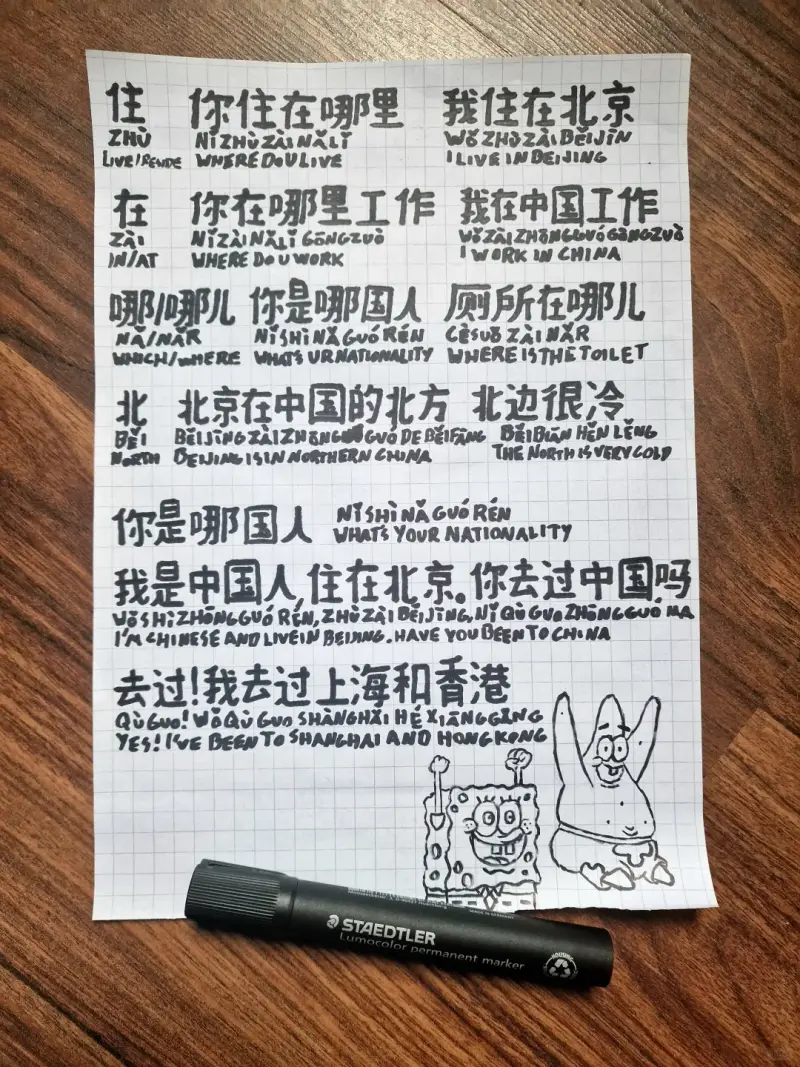
Kim’s illustrated Chinese vocabulary notebook, shared in the original story.
Kim believed that creative, visual learning worked especially well for him. Rather than simply memorizing a list of words, he used pictures to help the vocabulary stay in his memory.
But learning Chinese also presented challenges. Tones, pronunciation, character writing, pinyin, and remembering meanings all required practice. Kim found pronunciation particularly difficult and planned to improve it through focused study, repetition, and recordings of himself speaking.
Sharing his notes on HelloTalk gave him another way to learn.
Kim posted photos of his handwritten pages and videos of himself reading Chinese on HelloTalk Moments. Native Chinese speakers responded with encouragement and practical feedback. Some helped him identify mistakes in his characters, while others pointed out pronunciation problems or suggested corrections.
One of his posts showed a vocabulary page about common Chinese verbs. In the comments, users discussed how to pronounce words and write individual characters correctly. What started as a personal notebook had become a conversation with people who knew the language.
Kim also began using HelloTalk's live streaming feature. At first, being in front of the camera made him nervous. He was more accustomed to working behind a camera than speaking directly to an audience.
Still, he began broadcasting his study sessions, and other language learners joined to interact with him. Some Chinese speakers helped him correct mistakes, while Kim shared his notes and sometimes displayed Chinese snacks in the background to start conversations.
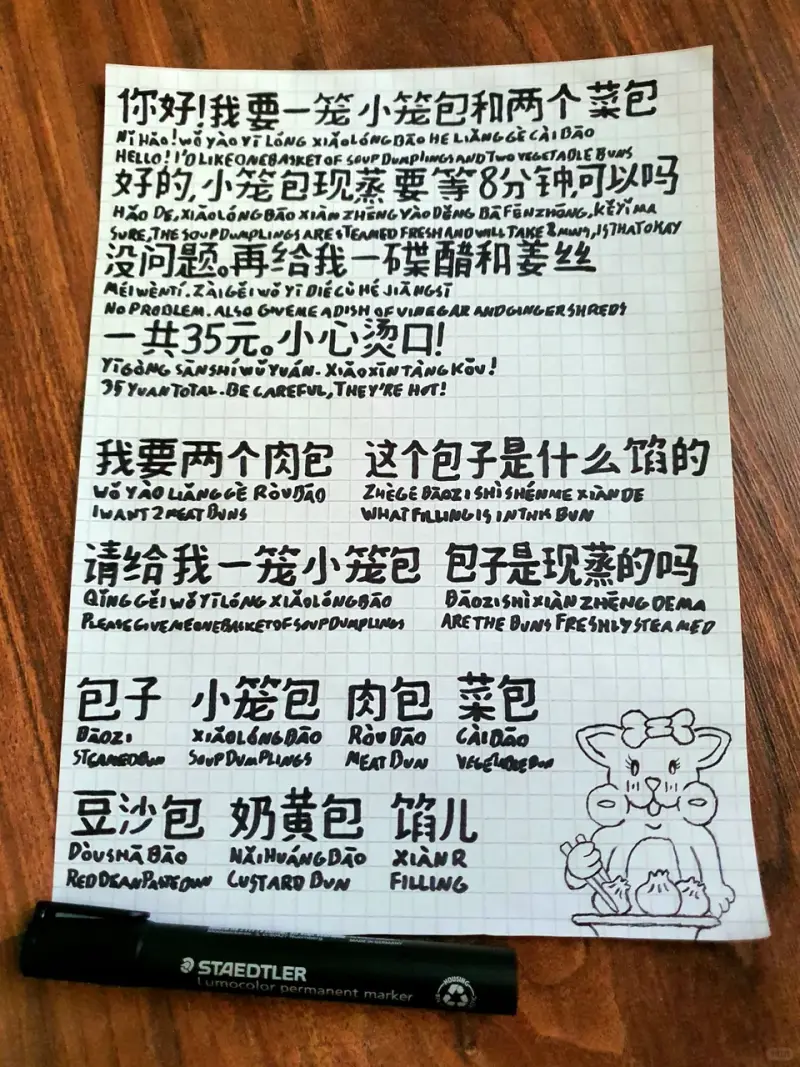
Kim drew a cat picking up a soup dumpling to go with his notes on steamed buns.
Eventually, he developed a routine: spending time studying independently before opening a live stream to talk with people from different parts of the world. He also exchanged English and Chinese with other learners.
Through these conversations, Kim made Chinese friends and discussed daily life, food, cultural differences, and personal experiences. He sometimes found it difficult to stop chatting long enough to return to his independent study.
One particularly meaningful connection began when a Chinese woman studying English joined one of his live streams. They continued talking privately, discovered shared interests, and developed a relationship over the following months.
Then came an opportunity to experience China beyond the screen.
For his 28th birthday, Kim gave himself a trip to China. He chose Shenzhen, the city where his girlfriend lived, as his first destination.
The trip brought plenty of new experiences. His girlfriend helped him communicate while they explored shopping areas, parks, museums, and art galleries. They watched a Jackie Chan movie, tried different Chinese foods, and visited an exhibition featuring the work of artist Georgette Chen.

Kim during his visit to Shenzhen, China.
Kim also tried using the Chinese he had studied for six months in everyday situations, including ordering food at restaurants. He found local people friendly and willing to slow down their speech or help him understand.
The experience made Chinese feel more tangible. Words he had practiced on paper were now appearing on menus, in conversations, and throughout the city.
Back in Finland, Kim continued working on his handwritten notes, adding new cartoon characters to his vocabulary pages. His story brings together several parts of language learning: personal interests, creative study habits, feedback from other speakers, and opportunities to communicate in real life.
Turn Your Chinese Notes Into Conversations on HelloTalk
Kim's experience shows how a personal study habit can become an opportunity to communicate with others. HelloTalk is a language exchange app where learners can connect with native speakers and practice languages through real conversations. If you're learning Chinese, you can use Moments to share a photo of your handwritten vocabulary, a short sentence, or a drawing that explains a new word. Other users can respond with suggestions, corrections, and examples of how the language is used. You can also practice speaking through voice messages or join live conversations when you feel ready.
To try something similar, begin with a topic you genuinely enjoy, such as food, movies, travel, or comic characters. Write down five Chinese words, add a few drawings or example sentences, and share your work in a Moment. You could ask, "Are these characters written correctly?" or "How would you say this naturally in Chinese?" When someone responds, try using one of those words in a short conversation. You can also explore Chinese language exchange partners on HelloTalk to find people to practice with. You don't need a perfect notebook or perfect pronunciation to begin.
Story and images from HelloTalk’s original WeChat article, published October 31, 2025.