
How to Make Japanese Friends Online—and Keep the First Conversation Going
A movie recommendation, a cooking photo, or a shared hobby can give you a reason to message someone in Japan. The next challenge is responding to their answer without turning the chat into an interview.
To make Japanese friends online, start somewhere people welcome interaction, look for a specific shared interest, and begin with a question about something they have chosen to share. Keep the exchange mutual: share your experiences, show interest in theirs, and leave room for the friendship to develop at its own pace.
Where to Find Japanese Friends Who Share Your Interests
Your starting point should match the kind of connection you want. A language exchange app suits people who want to learn from each other. An online hobby community gives you an activity to discuss. Public posts let you join an existing conversation before introducing yourself privately.
| Starting point | Look for | A useful first move |
|---|---|---|
| Language exchange | Compatible language goals and a shared hobby | Ask about a detail in their profile |
| Hobby community | Discussion about something you actually enjoy | Contribute to the topic before requesting a private chat |
| A public post | A photo, question, or recommendation you can respond to | Leave a relevant comment without asking for personal information |
If you are learning Japanese, explore HelloTalk’s Japanese language exchange community and look for someone learning a language you can help with. Read what they choose to share about themselves. Being Japanese is not a hobby; liking the same books, games, or kinds of food gives you a more personal starting point.
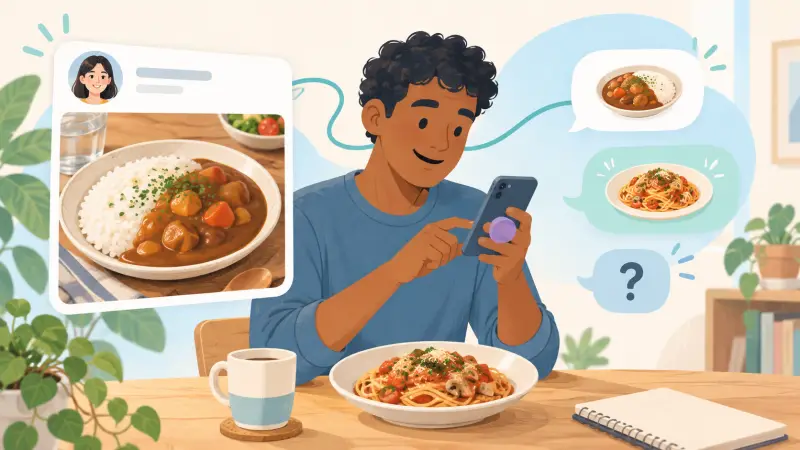
HelloTalk’s Moments posts offer another opening. If someone shares a homemade meal, discuss the food. Avoid leaving the same “Please be my friend” comment on unrelated posts. A relevant contribution helps someone understand why you want to talk to them.
Make Your First Message Specific and Easy to Answer
A good opening connects three things: something they shared, something true about you, and one manageable question. “Tell me about Japan” asks a stranger to choose an entire topic. “Do you prefer cooking at home or trying new restaurants?” gives them somewhere to begin.
- Notice a detail: Mention a hobby or public post, rather than their appearance.
- Add your side: Share a preference or small experience so the message feels like a conversation.
- Ask one question: Save your other questions for later.
Make your own interests visible, too. If your profile says only “I love Japan,” someone has little to respond to. Use HelloTalk’s profile guide to give potential friends a clearer picture of what you enjoy discussing.
For language exchange, a short offer can establish reciprocity: “I’m learning Japanese and can help with conversational English, if that’s useful.” Only offer a language you can comfortably help with. You do not need to turn every hobby discussion into a lesson or promise unlimited corrections.
If they mention a goal of their own, respond to it. Someone practicing English for travel might enjoy describing a favorite meal or asking about food where you live. Let them choose what they want help with. Returning the favor can be as simple as answering their question clearly and giving them time to express themselves.
Keep the language manageable. If you use translation, reread the result and check that you understand what you are sending. A short message you can follow up on is more useful than a polished paragraph you cannot discuss.
Three First Messages With Follow-Up Conversations
These are fictional examples, shown in English for clarity. Adapt them to the language you both agree to use, and replace the details with things that are true for you. The replies illustrate possible directions, not responses you should expect.
A Shared Interest in Movies
Your opening: “Hi! Your profile says you like animated movies. I usually notice the background art before the story gets going. What’s one movie you’d watch again just for how it looks?”
Their possible reply: “My Neighbor Totoro. I like the countryside scenes.”
Your follow-up: “I haven’t watched it yet, but that sounds like my kind of movie. I like stories where the setting feels like somewhere you could walk around. Do you usually choose quieter movies, or was this one an exception?”
Their possible reply: “Usually quieter ones. I like having something relaxing to watch after work.”
Your next turn: “I know that feeling. I tried watching a mystery after a long day recently and completely lost track of the story. Your recommendation sounds like a better choice for this weekend.”
Something to return to later: After actually watching it, mention one detail you noticed and connect it to their recommendation. You now have a shared reference instead of another round of introductions.
Their answer gives you something personal to respond to: how they unwind after work. You can relate to that experience without asking them to explain Japanese movies or produce a long recommendation list.
A Cooking Post You Can Relate To
Your opening: “Hi! The curry in your post looks great. I’m trying to cook more after work, but I keep making the same two dinners. Is curry one of your regular meals or something you make occasionally?”
Their possible reply: “Regular! I make enough for the next day.”
Your follow-up: “That’s exactly the kind of cooking I need. I usually make pasta, but I’m tired of washing a pan every night. I might try making a bigger batch this weekend.”
Their possible reply: “What kind of pasta do you make?”
Your next turn: “Usually tomato and mushroom. It’s simple, and I add whatever vegetables I have. I can send you my version if you’d like.”
Something to return to later: Share how your batch cooking went, including a small mishap if there was one. Ask about their week rather than requesting another recipe immediately.
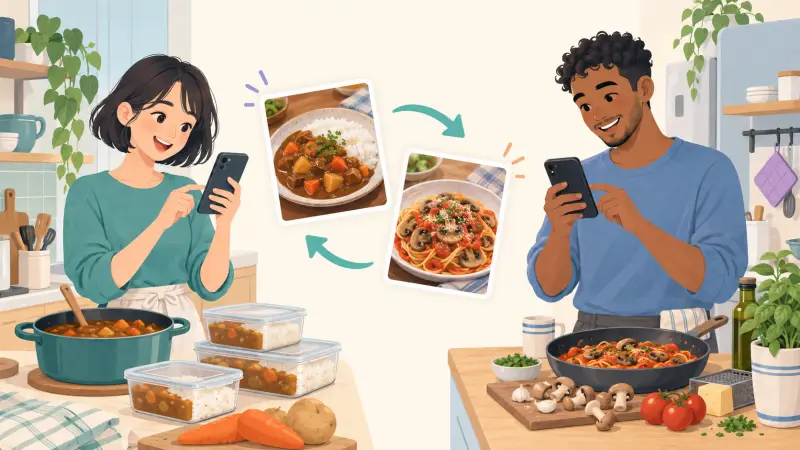
The reciprocal offer here is a recipe, not a demand for instruction. You are both contributing ordinary experiences, which gives the conversation somewhere to go even when neither person wants to practice vocabulary.
A Photography Hobby at Any Skill Level
Your opening: “Hi! I liked the evening light in your park photo. I mostly take pictures on my phone, and mine often come out too dark. Was yours taken on a phone or a camera?”
Their possible reply: “Just my phone. I took a few before I liked one.”
Your follow-up: “That makes me feel better—I usually delete most of mine! I like photographing reflections after rain. What do you find yourself taking pictures of most?”
Their possible reply: “Clouds and my cat.”
Your next turn: “Clouds are great because they’re different every day. My last cloud photo looked like a giant fish. If you’re interested, we could each share a sky photo sometime.”
Something to return to later: If they welcome the idea, share a photo and one sentence about what caught your attention. Avoid including your home address or another person’s identifying details.
A small shared activity gives you a reason to reconnect. It should stay optional; sending an invitation does not create an obligation to participate.
Keep the Conversation Comfortable for Both of You
Ask About Preferences Instead of Guessing
There is no single messaging style that every Japanese person prefers. Ask your new friend what works for them rather than treating nationality as an explanation for their behavior.
- Language: “Would you rather use English, Japanese, or a mix?”
- Corrections: “Would you like language corrections while we chat, or only when you ask?”
- Calls: “Would you be comfortable with a short voice call sometime? Text is fine, too.”
Avoid turning someone into a spokesperson for Japan or assuming they will plan your trip. Ask about their own experiences, and accept it when they would rather discuss something else.
Leave Space for Replies and Boundaries
A short reply can mean someone is busy, unsure what to say, or still learning the language. Respond to what they actually said. You can share one related detail without adding another question. If the exchange remains one-sided, let it rest.

Keep early conversations in the app, and do not press for phone numbers, private photos, or immediate calls. Review HelloTalk’s safety guidance and reporting options if someone pushes your boundaries. You can end a conversation, block an account, or report inappropriate behavior.
For your next conversation, choose one shared interest and send a specific opening with something of your own to contribute. Then pay attention to the person’s answer. Friendship needs room for both people to shape what happens next.
FAQ
Can I make Japanese friends online if I only speak English?
Yes, if the other person is comfortable communicating in English. Be honest about your Japanese level and ask which language they prefer.
What should I say after we exchange greetings?
Return to a shared interest: mention something you have tried, watched, or made, then invite their perspective. Avoid restarting with another generic introduction.
Should I send another message if someone has not replied?
Give them space. If you already had a conversation, one relevant follow-up may be welcome, but repeated messages asking for a reply can create pressure.
How can I tell whether a conversation is becoming a friendship?
Look for mutual curiosity over time: both people share things, remember earlier details, and sometimes initiate contact. Fast replies alone do not tell you that.